Product Designer @ TIMELY
Aug 2022 - Sep 2023
Wiring a design system into delivery workflows to reduce debt and speed up delivery
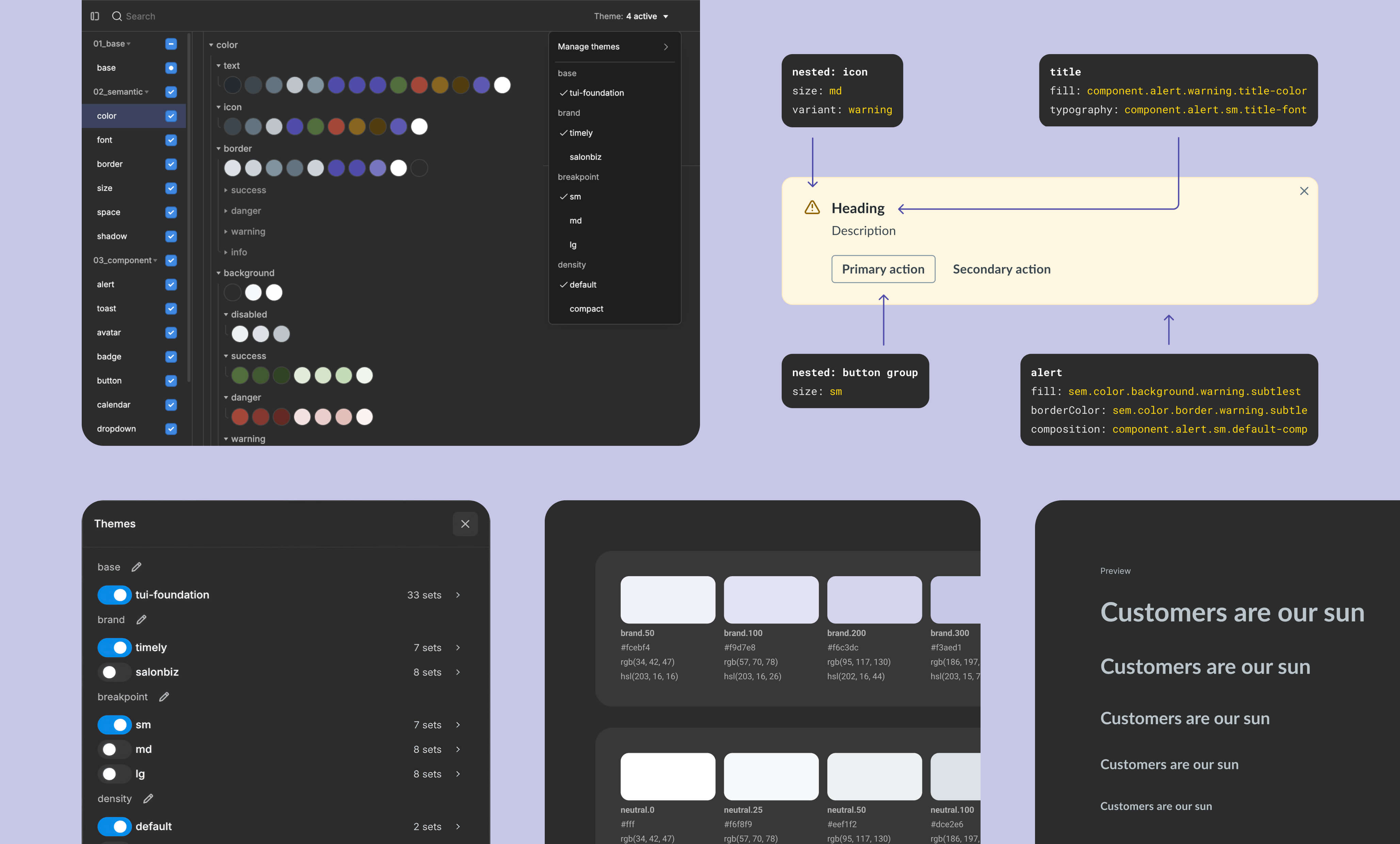
Rebuilding from scratch instead of patching created a scalable foundation across multiple stacks, brands, and teams
The key decision was whether to evolve the existing system or rebuild it. The product spanned multiple stacks with no shared primitives, no token layer, and inconsistent patterns across teams.
Token-based architecture (primitive, semantic, component tokens)
Multi-brand and theme support
WCAG accessibility built into components
Support for multiple platforms and stacks
Connected workflow across Tokens Studio, Storybook, Chromatic, and Supernova
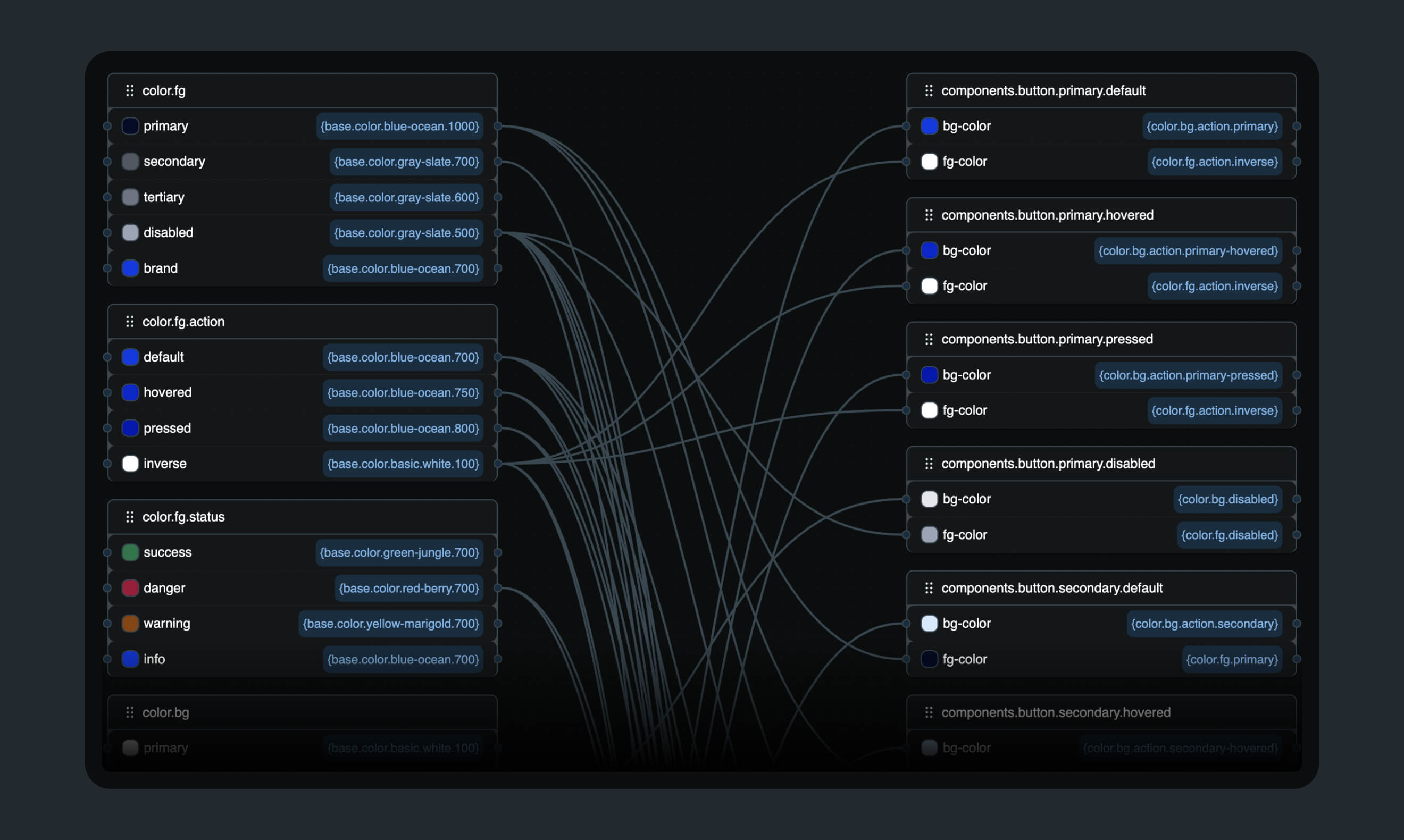
Education improved design quality but the system didn't reach production. Automated PR checks made adoption a delivery requirement
Documentation, onboarding, and design reviews improved quality in Figma, but the system often did not reach production. Under delivery pressure, engineers defaulted to legacy code because it was faster in the short term, while debt continued to accumulate.
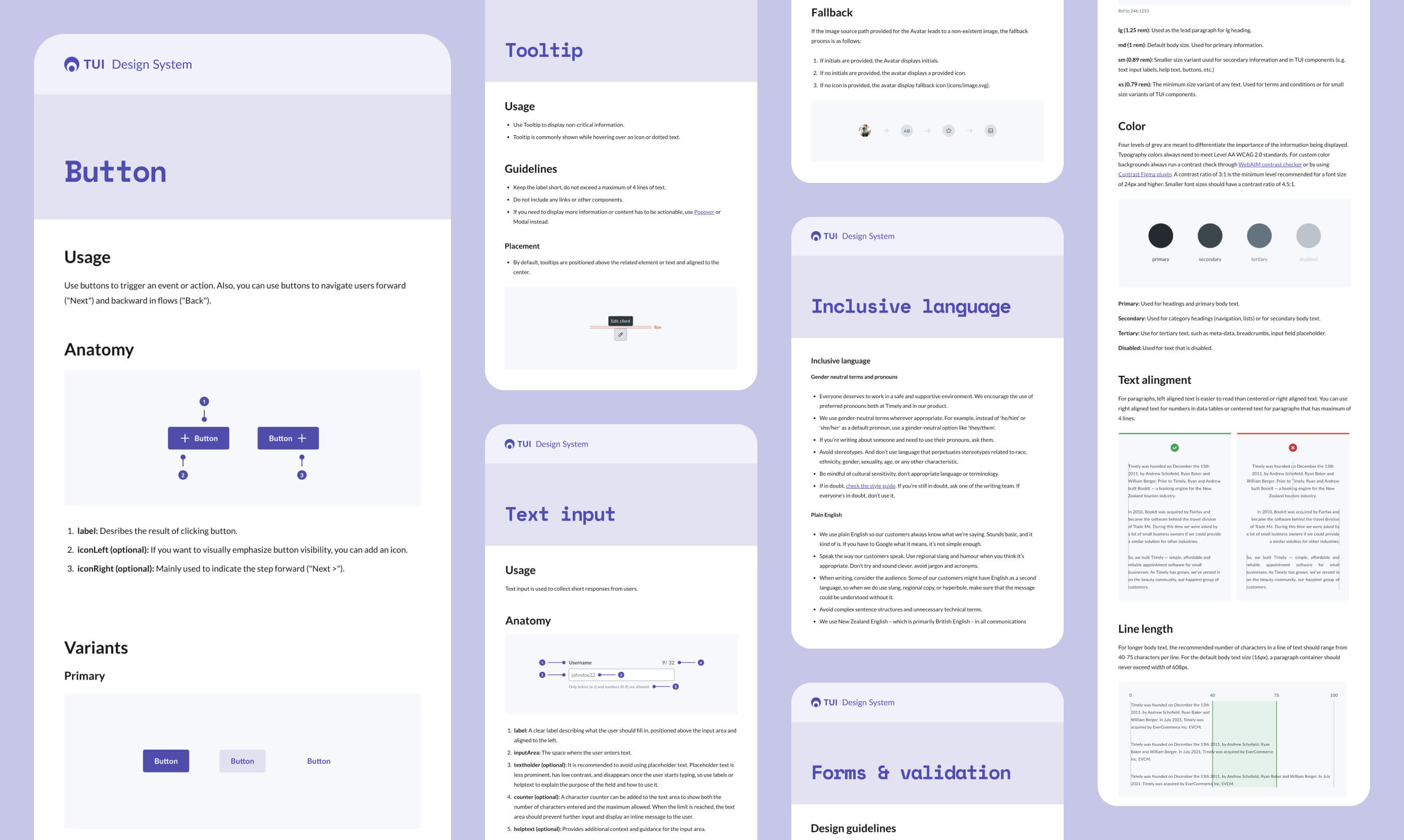
We shifted from education to enforcement. Automated PR checks scanned new and updated code, blocking hardcoded values and requiring tokens. Feature updates had to reduce legacy usage by 30%. Adoption moved from optional to part of the delivery pipeline.
Filip built a world-class design system with engineering and established the practices needed to drive its adoption.
Amanda Judd
Head of Design @ Timely
Making adoption visible and tying it to OKRs turned it into team accountability
Adoption became a team level OKR tied to delivery efficiency and debt reduction. Slack reporting tracked token usage and legacy removal, and a shared kanban allowed teams to plan around system readiness.
Designers and engineers became active contributors. I worked closely with designers to help them build components end to end, from applying token principles and accessibility standards to defining acceptance criteria and documentation. The system became something the whole team owned and maintained.
0%
0%
Hardcoded values replaced with tokens
0+
0+
Components shipped and adopted
Redesigning the most complex feature validated the system could scale
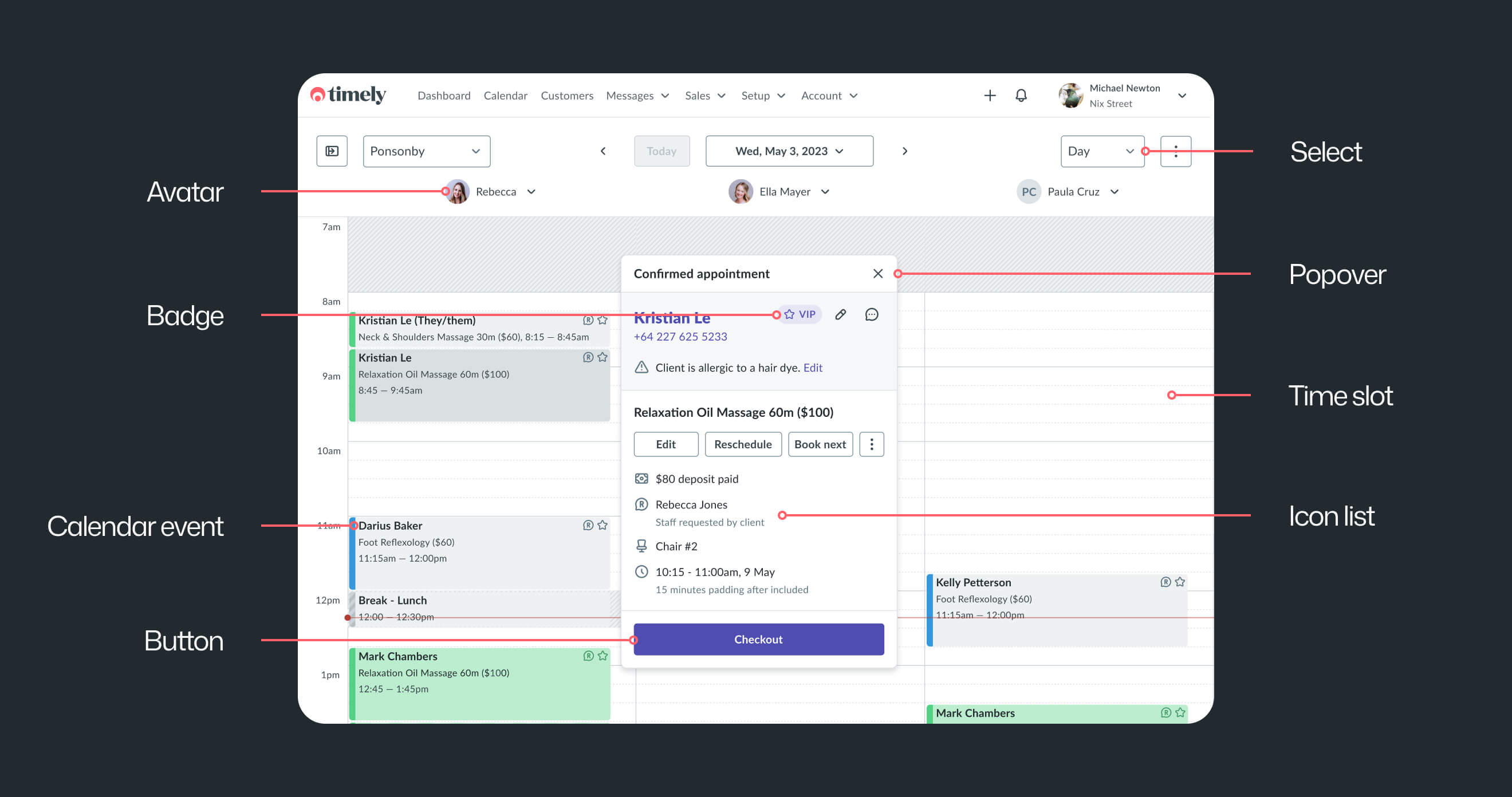
I joined one product team to redesign the calendar from scratch using only system components and tokens. The calendar was the right test. It touches scheduling, billing and client management across multiple teams. If the system could hold there, it could hold anywhere.
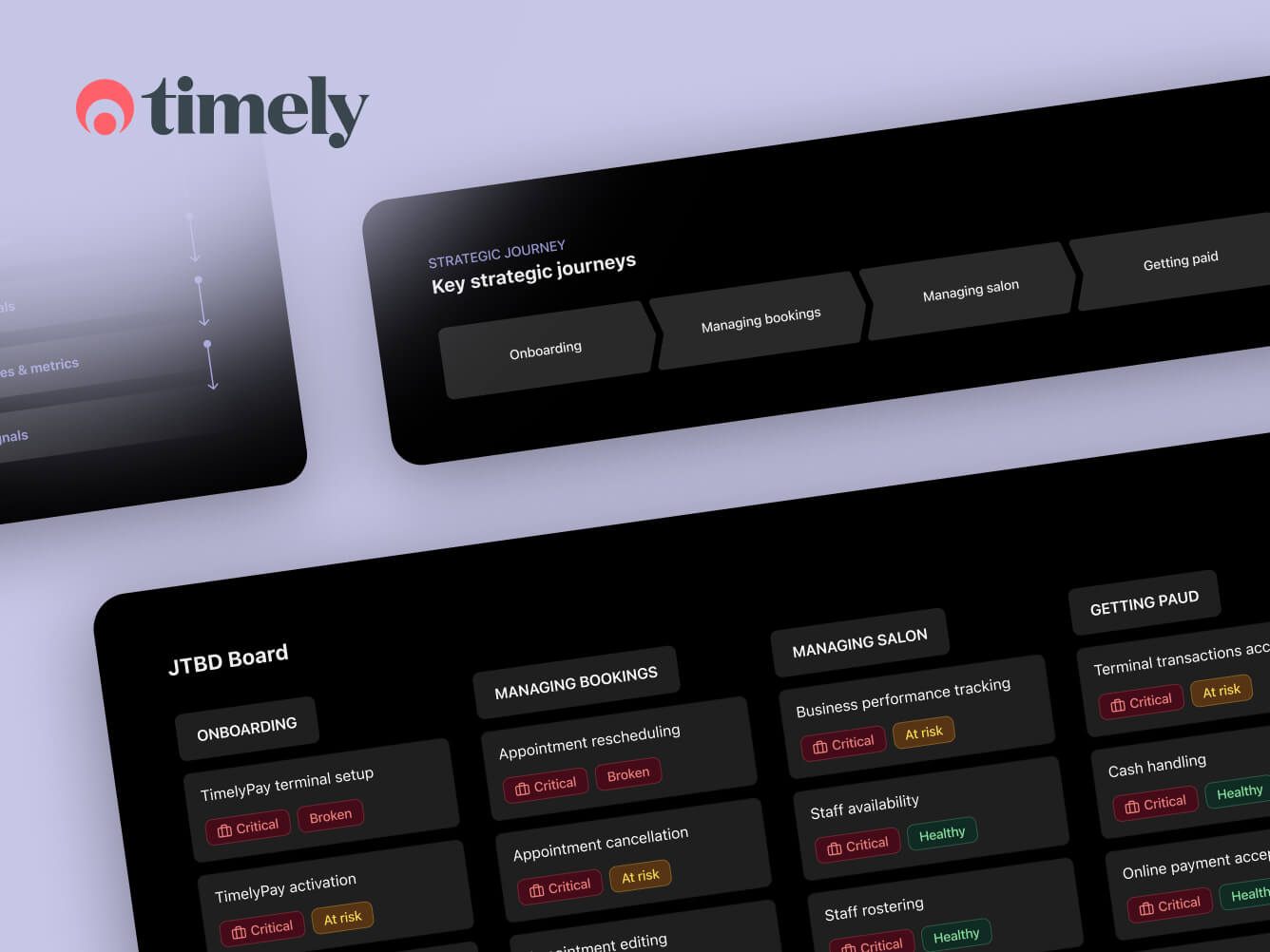
The redesign ran end to end, from quantitative data and journey mapping through broken journey identification, accessibility checks, testing and iteration. It validated that the system was stable enough to carry a major product surface without exceptions or workarounds.
What I learned
Adoption does not happen because a system is well designed. It happens when it becomes part of how work gets done. The most effective change was embedding the system into delivery workflows and making progress visible and accountable.
Once the system became the default path, everything else followed. If it stays optional, it will not survive deadline pressure.